

CLP and Product Labelling: Keeping Stock Compliant Before It Ships
What CLP labelling requires, what the 2024 update changed, and how relabelling in the warehouse keeps imported and hazardous stock compliant before dispatch.
By The Juvo team — 11 August 2026
TL;DR: CLP labelling is the EU system for warning people about hazardous chemicals, using pictograms, signal words and set phrases. A major update, in force since December 2024, tightened the rules from 1 July 2026, including a new EU-based supplier address on the label. When stock arrives without compliant labels, someone has to relabel it before it can be sold. This guide covers what the rules ask and how relabelling works in the warehouse, for e-commerce and B2B alike.
A product can clear customs, reach your warehouse, and still be illegal to sell, all because of its label. For anything classed as a hazardous chemical, from cleaning sprays to certain cosmetics and batteries, CLP labelling decides whether the goods can go out the door. The rules changed recently, and imported stock is often the most exposed, since it may arrive with labels made for another market. Getting the label right is the last compliance step before dispatch. Here’s what CLP asks for, what the 2024 update changed, and how relabelling fits into the flow for both e-commerce sellers and B2B distributors.
What is CLP labelling?
CLP labelling is the EU’s way of communicating chemical hazards on a product. Under Regulation (EC) No 1272/2008, a hazardous substance or mixture must carry the right hazard pictograms, a signal word, hazard statements, precautionary statements, the product identifier, and the supplier’s details.
CLP stands for Classification, Labelling and Packaging, and it puts the UN’s global hazard system into EU law. The pictograms are the nine familiar red-diamond symbols, each flagging a type of physical, health or environmental hazard. The signal word is either “Danger” or “Warning”. The hazard statements (the H-phrases) describe the risk, and the precautionary statements (the P-phrases) say how to handle it safely. The supplier classifies the product; the label simply has to carry that classification correctly. Miss an element and the product isn’t compliant, which is why this matters as much for a small e-commerce batch as for a B2B pallet.
What changed under the 2024 CLP update?
The rules were overhauled by Regulation (EU) 2024/2865, in force since 10 December 2024, with most provisions mandatory from 1 July 2026. It’s the biggest shake-up to chemical labelling in years, so any product placed on the EU market now needs to meet the new standard.
Several changes affect the label directly. There are minimum font sizes and readability rules, with black text on a white background in a plain sans-serif. Fold-out booklet labels are now allowed for any pack size, which helps fit multiple languages on small containers. The update also adds a first framework for digital labelling, new hazard classes, and a ban on misleading claims like “harmless” on a hazardous product. The change with the widest reach: the label must now show an EU-based supplier responsible for CLP compliance. For goods coming from outside the EU, that often means the existing label no longer passes.
Why imported goods often need relabelling
Imported stock is where labelling problems cluster. A product made for another market may arrive with the wrong language, missing statements, or no EU-based responsible supplier, none of which the old label can fix on its own.
This links straight to the customs side of importing. Goods can pass customs clearance and still be unsellable until their labels meet EU rules, so the two steps sit next to each other rather than one replacing the other. For hazardous products sold online, the rules also require the label elements to be shown clearly in the distance-sale listing, and non-EU sellers now need that EU-based responsible supplier in place. The practical fix is usually relabelling: applying a compliant label over or alongside the original once the goods land. For the full picture of getting goods through the border first, see our guide on customs and import handling.
Labelling as a value-added service
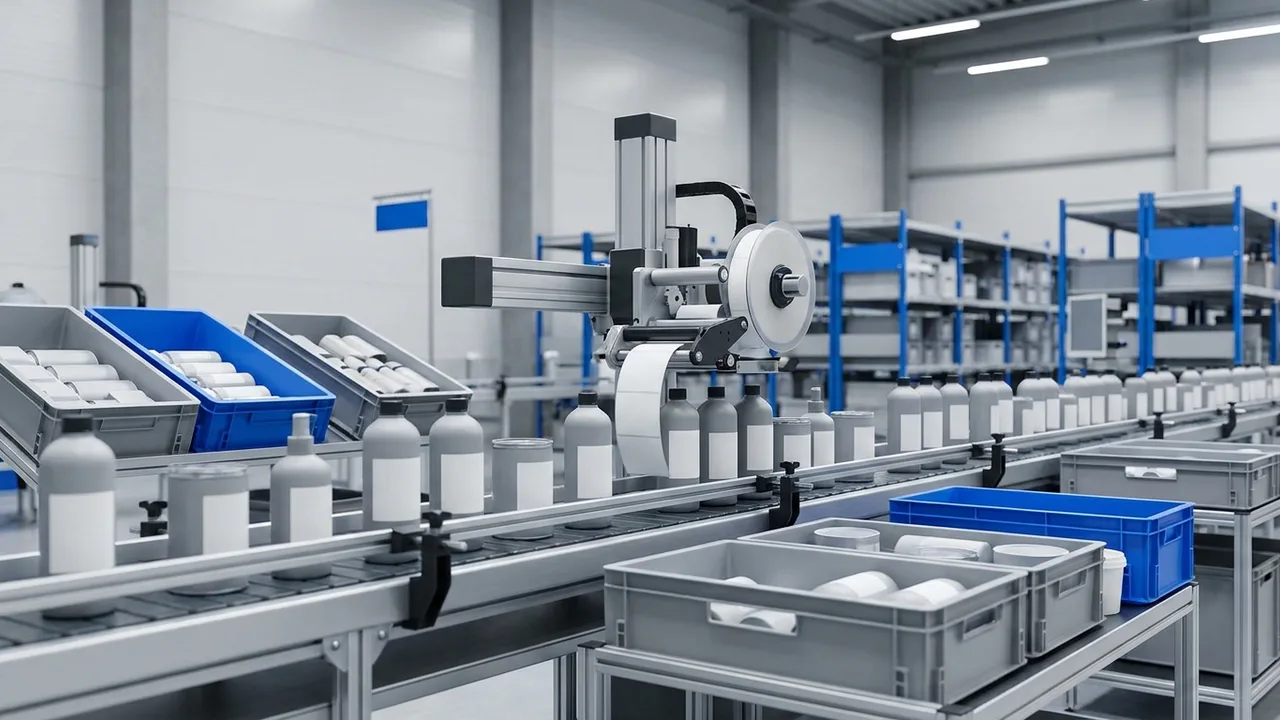
Relabelling is a value-added service that happens in the warehouse, before stock is picked and shipped. It covers applying compliant CLP labels, localising the language, adding the EU responsible-supplier address, fixing barcodes, and replacing non-compliant labels on incoming stock.
The timing is what makes it work. Labelling is done at receiving or just before dispatch, folded into the same handling as kitting and other value-added services rather than treated as a separate project. Because labels must also be updated when a classification changes, having this handled where the stock already sits saves shipping goods back and forth. It suits an e-commerce brand keeping DTC listings compliant just as much as a distributor preparing technical or spare-part stock for trade buyers. The warehouse applies the label the supplier’s classification requires; it doesn’t reclassify the product.
Getting labelling right before dispatch
Compliant labelling is the last gate before goods can sell. CLP sets the hazard elements; the 2024 update raised the bar from 1 July 2026, and imported stock often needs relabelling to meet it. Handle that in the warehouse and a cleared shipment turns into sellable stock without a detour.
The pattern is the same whether you ship single orders to shoppers or pallets to trade. Get the label right once, at the point the goods are handled, and everything downstream runs clean. If you want labelling and compliance built into how your stock is received and shipped, talk to Juvo about value-added services.
Frequently Asked Questions
What is CLP labelling? CLP labelling is the EU system for warning about chemical hazards, set by Regulation (EC) No 1272/2008. A hazardous product must show the right hazard pictograms, a signal word, hazard and precautionary statements, the product identifier, and supplier details. CLP puts the UN’s global hazard system into EU law.
What does the 2024 CLP update change? Regulation (EU) 2024/2865 has been in force since December 2024, with most provisions mandatory from 1 July 2026. It adds minimum font sizes, fold-out labels for any pack size, a digital labelling framework, new hazard classes, a ban on misleading claims, and a required EU-based supplier responsible for compliance.
Do imported products need to be relabelled for the EU? Often, yes. Goods made for another market may arrive with the wrong language, missing hazard statements, or no EU-based responsible supplier. Since these are now required, the original label may not comply, so the stock is relabelled once it lands, before it can be sold.
What is relabelling as a value-added service? Relabelling is a warehouse service where incoming stock is fitted with compliant labels before it ships. It covers applying CLP labels, translating label text, adding the EU supplier address, and fixing barcodes. It is usually done at receiving or before dispatch, alongside other value-added work.
Does a 3PL classify my products for CLP? No. The supplier or manufacturer classifies the hazard; that is not the warehouse’s role. A 3PL applies the label that the classification requires and can relabel non-compliant stock, but it does not decide the hazard classification itself.