

Do You Need a WMS If You Outsource Your Logistics?
A WMS is the software that runs a warehouse. If you outsource fulfilment, your provider runs one and you inherit it. Here is what a WMS does and why you rarely need to buy your own.
By The Juvo team — 11 August 2026
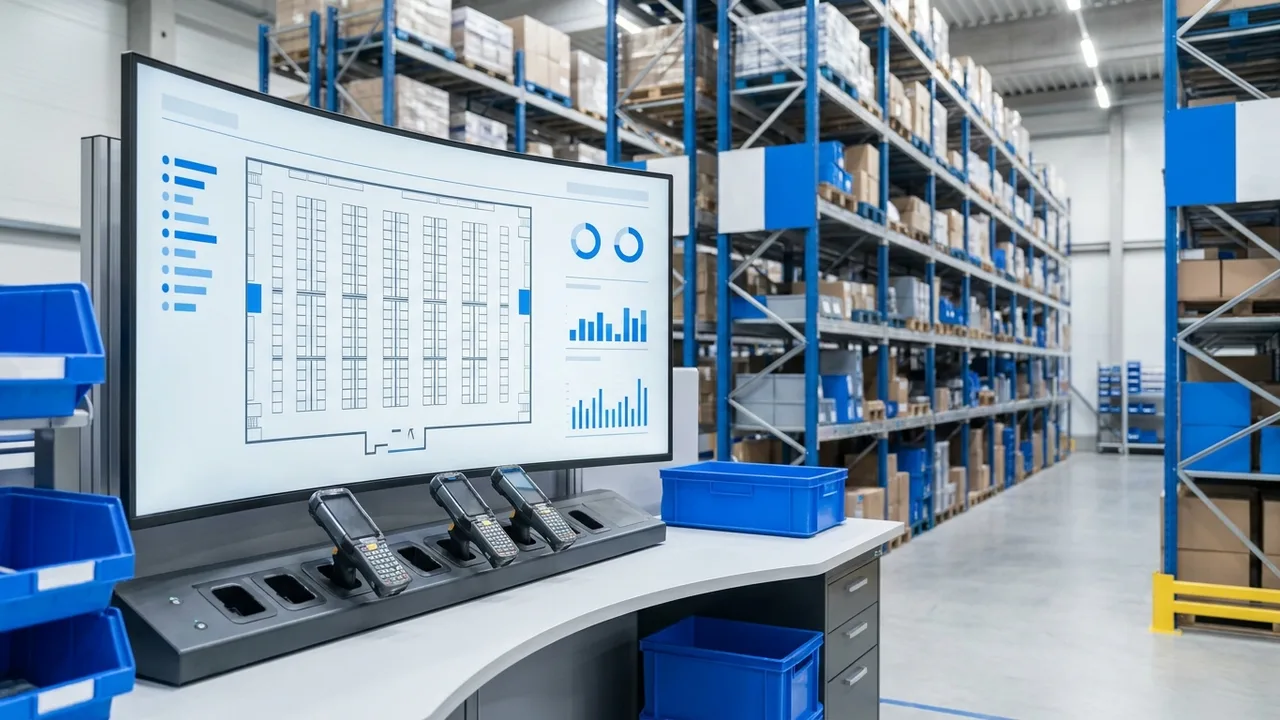
TL;DR: A WMS (warehouse management system) is the software that runs a warehouse day to day: receiving, storage, picking, packing, shipping and stock records. If you outsource fulfilment, you do not need to buy your own. Your provider runs the WMS, and you see your stock and orders through their portal.
“Do I need logistics software?” is a fair question for any growing seller, and the honest answer depends on who runs your warehouse. If you handle your own stock, a WMS is a big decision. If you hand fulfilment to a partner, the decision changes shape entirely. This guide explains what a WMS is and why outsourcing usually means you inherit one rather than buy one.
What is a WMS?
A WMS, or warehouse management system, is the software that runs the daily work of a warehouse. It controls receiving, putaway, picking, packing, shipping, returns and stock records, and it keeps inventory counts accurate across every sales channel. In short, it is the system that turns a building full of shelves into an operation that can find, pick and ship the right item on time.
Do you need your own WMS if you outsource fulfilment?
No. When you outsource, your logistics provider already runs a WMS, and you get its benefits without buying or building anything. A 3PL’s WMS gives the brands it serves real-time visibility and control over their stock and orders. So the capability you would have paid for is included in the service, and someone else carries the cost and upkeep.
Buy your own or inherit your provider’s?
Running your own WMS is a serious project. You license the software, integrate it with your store and carriers, set up the warehouse, and train staff to use it, then you own the maintenance and upgrades. Inheriting your provider’s WMS skips all of that: the system is already live, already integrated and already staffed. For most online sellers and growing businesses, the second route delivers the same outcome, accurate stock and orders that ship on time, without the build and the bill. Buying makes sense mainly when you run your own warehouse and want full control of the operation, or when your volumes are large enough to justify a dedicated system and the team to run it. For most sellers scaling through a partner, that day is a long way off, and the provider’s system does the job in the meantime.
How do you see your stock if the provider runs the WMS?
Through a client portal. A good 3PL gives you a web view into the same system its warehouse runs on, so you can check stock levels, follow orders and pull reports whenever you need them. Juvo does this through a single platform that connects your store, your stock and your carriers, with a portal for tracking orders and anticipating replenishment. You get the visibility of running your own software, without running it.
What does a 3PL WMS do differently?
A provider’s WMS is built to handle many clients at once, which a single-business system is not. It separates each client’s stock, rules and reporting inside one platform, and it connects to online stores, marketplaces and carriers to pull orders in and push tracking back out automatically. That multi-client design is why it can apply your specific rules, whether you ship single parcels to shoppers or larger orders to trade accounts, while still running everyone else’s goods through the same warehouse.
What should you check about a provider’s WMS?
You do not need to judge the software itself, but a few questions tell you whether it will serve you. Does it connect to your online store and marketplaces, so orders flow in without manual work? Does it push tracking back to your customers automatically? Can you see live stock levels and pull your own reports through a portal? And can it apply your rules, whether you ship single parcels or larger trade orders? These are the practical checks that separate a system that fits your business from one that slows it down. The point is the outcome for your orders, not the brand of software behind the scenes.
The bottom line for outsourcing
If you are weighing up logistics software, the first question is not which system to buy, but whether you should be buying one at all. Outsource your fulfilment and the software comes with the service: your provider runs the WMS, keeps it integrated, and gives you a window into your own stock. That is less cost, less setup and less to maintain, for the same result. Juvo stores and ships your goods across a French warehouse network and gives you real-time visibility through its platform.
Rather inherit a working system than build your own? Talk to Juvo about outsourced storage and fulfilment for your business.
Frequently asked questions
What is a WMS in simple terms? A WMS, or warehouse management system, is the software that runs a warehouse day to day. It manages receiving, storage, picking, packing, shipping and returns, and keeps stock counts accurate across your sales channels.
Do I need to buy a WMS if I use a 3PL? No. Your 3PL already runs a WMS, and you get its benefits as part of the service. You inherit the system rather than buying, integrating and maintaining your own.
How do I track my stock if my provider runs the software? Through a client portal. A good provider gives you a web view into their system, so you can check stock levels, follow orders and pull reports in real time without operating the software yourself.
What is the difference between a normal WMS and a 3PL WMS? A normal WMS is built for one business managing its own stock. A 3PL WMS is built for many clients at once, keeping each client’s stock, rules and reporting separate while connecting to their stores, marketplaces and carriers.
When does it make sense to run your own WMS? Mainly when you operate your own warehouse and want full control of the setup. If you outsource fulfilment, buying your own usually adds cost and effort for a capability your provider already supplies.