

Made-to-Measure Cartons: How Right-Sized Boxes Cut Shipping Cost and Protect Your Products
A made-to-measure carton cuts the volumetric weight carriers bill and protects fragile products. When custom boxes pay off, and what your 3PL handles.
By The Juvo team — 11 August 2026
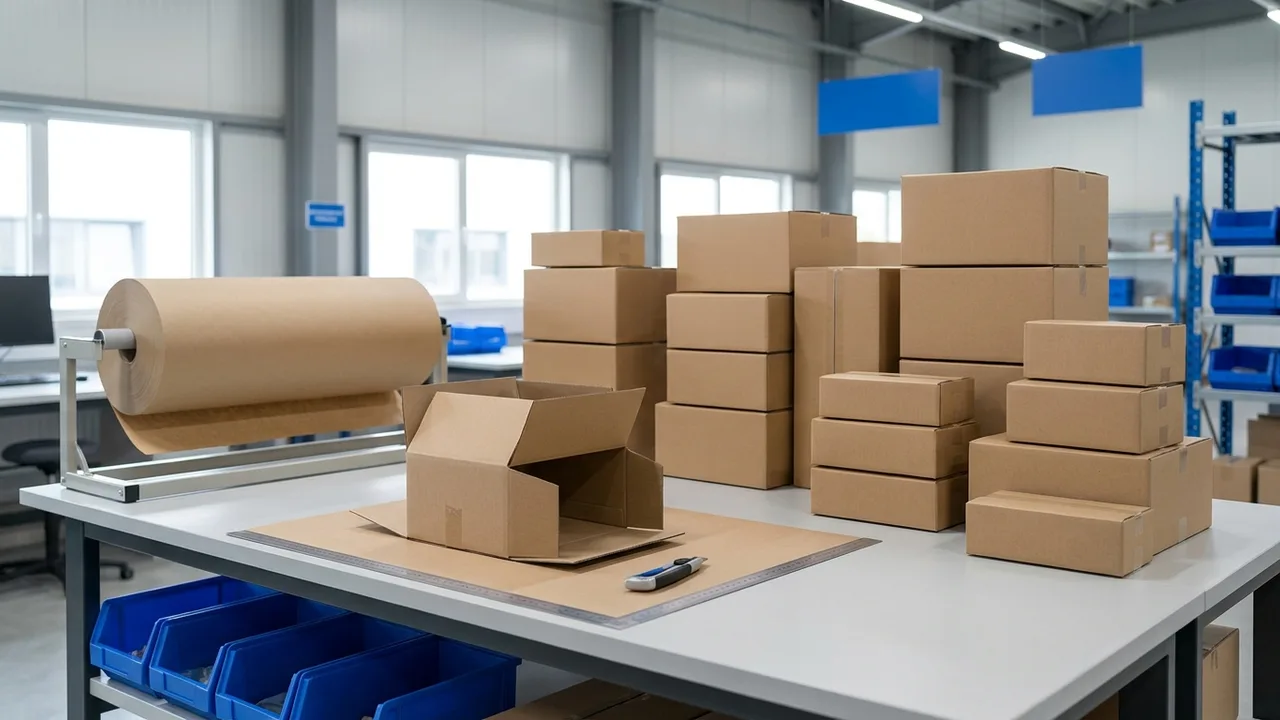
TL;DR: A made-to-measure carton is a box built to fit one product closely, instead of forcing it into a standard size. For e-commerce and B2B shippers it does two jobs at once: it cuts the volumetric weight carriers bill you for, and it holds fragile or odd-shaped items still so they arrive intact. This guide explains when a custom carton pays off and what a 3PL needs to make it work.
Ship a small product in a big box and you pay twice. You pay for the empty space, because carriers bill by size as well as weight, and you pay again when the item rattles loose and arrives damaged. A made-to-measure carton fixes both problems at once. It is a box cut to the product’s real dimensions, with just enough room for protection and no more. For e-commerce brands, this is one of the cheapest ways to lower a shipping bill. For businesses sending technical goods or spare parts, it is often the only way to protect an awkward shape in transit. This guide covers how custom cartons work, when they beat standard boxes, and what your logistics provider handles.
Why Does Box Size Affect Your Shipping Bill?
Carriers charge on volumetric weight, not just actual weight. They take the box’s length, width and height, convert that volume into a weight figure, and bill you for whichever is higher. So a light product in an oversized box is billed as if it were heavy.
The gap between real and billed weight is where money leaks. Because the volume figure multiplies three dimensions together, trimming even one of them lowers the charge on every parcel that leaves the warehouse. That is why right-sizing packaging to within a couple of centimetres of the product typically cuts shipping spend by 15 to 30%. Across thousands of orders, shipping air quietly becomes one of the largest avoidable costs in the whole operation. A parcel that is mostly empty space still travels as though it were full, so the answer is to shrink the box, not the product. On bulky items the effect is larger still, because both the size charge and the handling class can drop when the carton comes down a tier.
What Is a Made-to-Measure Carton?
A made-to-measure carton is a box sized to a specific product or order rather than pulled from a rack of standard sizes. Some are pre-made in custom dimensions; others are cut on demand by cartonization systems that build the right box for each order in real time.
The aim is a snug fit: enough room for cushioning where the item is fragile, and no wasted space anywhere else. This is about fit and protection, not branded design. Custom print, inserts and the unboxing experience are a separate job, and so are the rules on recyclable materials and empty-space limits. A made-to-measure carton is first of all a size decision.
When Is a Custom Carton Worth It?
A custom carton pays off when your product is an odd shape, unusually fragile, or much smaller than the box it currently ships in. In those cases the fit either saves real money on volumetric weight or prevents damage that would cost far more in returns.
Standard boxes are fine for regular shapes shipped in volume, and holding a tight range of stock sizes keeps packing fast. But under-protective or oversized packaging drives a large share of parcel damage claims, and every damaged parcel means a replacement, a return, and often a lost customer. For a business shipping heavy or awkward spare parts, a carton built around the part is regularly cheaper than repeated breakage. The sensible way to find out is to test one product at a time and track both the rate change and the damage rate before rolling it out. The maths also differs by channel. An e-commerce brand usually chases the volumetric-weight saving across many small parcels, while a business shipping fewer, heavier orders of technical parts is buying protection first and the freight saving second.
What Does Your 3PL Handle?
Your logistics provider turns a custom-carton decision into a repeatable process. That means measuring each product accurately, matching it to the right box, and packing it the same way on every order so the saving actually holds.
Accurate product dimensions are the starting point, because a cartonization system is only as good as the measurements it is fed. A provider right-sizing at the pack bench keeps a controlled set of box sizes, records the correct box for each item, and updates it when a product changes. Doing this at scale, for e-commerce parcels and business shipments alike, is where a value-added packaging service earns its place. Using less board per parcel trims material cost as well, a useful side effect of packing to size.
Conclusion
A made-to-measure carton is a small change with an outsized return. It lowers the volumetric weight carriers bill on every parcel, and it protects the products that standard boxes leave rattling. The saving only sticks when someone measures accurately and packs consistently, order after order. If you ship fragile items or awkward parts, or you suspect you are paying to ship air, we can help you right-size it. Get in touch and we will look at your orders and show you where a better-fitting carton would pay off.
Frequently Asked Questions
What is a made-to-measure carton? It is a shipping box sized to fit a specific product or order closely, rather than a standard box the item is dropped into. The snug fit cuts wasted space and holds the product still in transit. Some are pre-made to size, and others are cut on demand.
How does a custom carton reduce shipping costs? Carriers bill on volumetric weight, which turns box size into a cost. A smaller, right-sized box lowers that figure, and right-sizing typically cuts shipping spend by 15 to 30%. The saving applies to every parcel you send.
When should I use a custom box instead of a standard one? Use one when the product is fragile, an odd shape, or much smaller than its current box. In those cases a snug carton either saves money on volumetric weight or prevents damage that costs more in returns. Regular items shipped in volume are usually fine in standard sizes.
Do made-to-measure cartons help with product damage? Yes. A box that fits leaves less room for the item to move, which lowers the chance of breakage in transit. This matters most for fragile goods and heavy or awkward spare parts, where a replacement and return cost far more than the packaging.
Can a 3PL manage custom packaging for me? Yes. A logistics provider measures each product, matches it to the right box, and packs it the same way on every order so the saving and the protection hold. Accurate dimensions are key, since right-sizing depends on knowing each item’s true size.