

Co-Packing for E-commerce: Bundles, Boxes and Marketplace-Ready Units
Co-packing for e-commerce means building sellable units for online orders: bundles, subscription boxes, and marketplace prep. What it covers and when to outsource it.
By The Juvo team — 11 August 2026
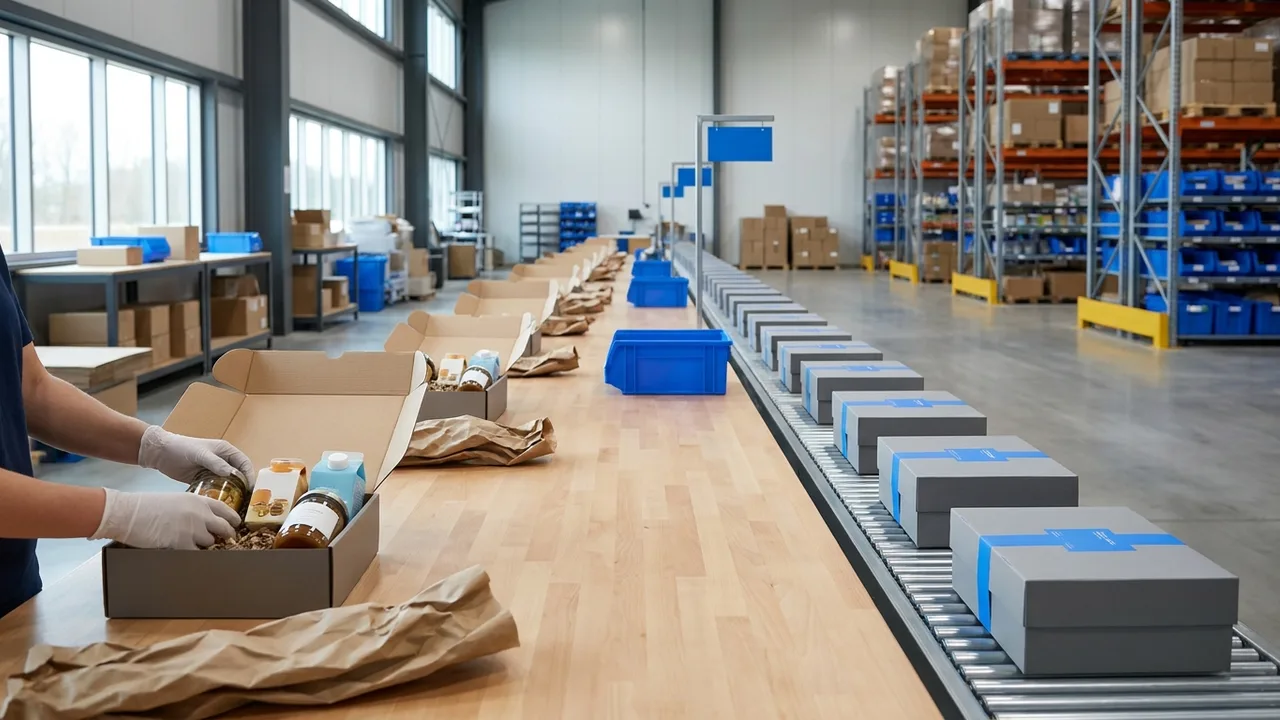
TL;DR: Co-packing for e-commerce is the work of building your products into sellable units for online orders: multi-item bundles, subscription boxes, and units prepped to marketplace rules. Done inside your fulfilment flow, it turns loose stock into ready-to-ship products without a separate supplier. This guide covers what it involves, the main online use cases, and when outsourcing it pays off, for DTC brands and trade sellers alike.
Selling online often means selling something other than a single product off the shelf. A bundle, a monthly box, a promo three-pack, a marketplace-ready unit: each has to be built before it can ship. That building step is co-packing, and doing it well is what lets an e-commerce brand offer bundles and boxes without drowning its own team in assembly work. When it happens inside the same warehouse that stores and ships your stock, the whole thing runs as one flow. Here’s what co-packing for e-commerce covers, where it earns its keep online, and when to hand it over.
What is co-packing for e-commerce?
Co-packing for e-commerce is the process of building your products into new sellable units for online orders. That means bundling several items into one sellable pack, assembling subscription boxes, or prepping units to meet a marketplace’s rules, all before the order ships.
It’s different from the everyday pick and pack that happens per order. Co-packing creates the product itself: a three-pack that scans as one item, a gift set, a curated box. The general economics and quality control of kitting and assembly sit alongside it as a broader value-added service. What makes co-packing an e-commerce topic is the channels it feeds: your own store, subscriptions, and marketplaces, each with its own way of wanting goods packed.
The main e-commerce use cases
Three uses cover most online co-packing: subscription boxes, retail-ready bundles, and marketplace prep. Each turns raw stock into a unit a specific channel can sell.
Subscription boxes are the clearest case. A partner assembles each box from multiple SKUs and syncs with your store so recurring orders are generated and packed on schedule, not batched by hand every month. Retail-ready bundles and promo multipacks come next: DTC kits with branded inserts, variety packs, or gift sets built to sell as one item, whether to online shoppers or to trade buyers wanting shelf-ready units. The same assembly line serves a DTC brand’s website and a distributor prepping packs for retail. Bundles also earn their place commercially: they give shoppers a reason to add more to the basket, and they let you shift slower lines by pairing them with bestsellers. Getting these built where your stock already sits saves shipping components back and forth.
How co-packing keeps you marketplace-ready
Marketplace prep is co-packing aimed at strict channel rules. Selling through a marketplace like Amazon means units have to arrive packed exactly to spec, or they get rejected at the inbound warehouse and hold up your whole shipment.
That prep work is specific and fiddly: barcode labelling, polybagging, suffocation warnings, carton checks, and bundling items so they scan as a single unit. Small errors cause real delays and penalties, which is exactly why brands tend to outsource this step first. A co-packer that knows the rules gets units accepted the first time. Note this is channel-scan prep, not the hazard labelling that regulated products need, which is a separate compliance job. The point is that a unit built to the marketplace’s spec moves through inbound cleanly and starts selling sooner.
Why do co-packing inside your fulfilment flow?
Co-packing works best where your stock already lives. When the same partner stores your goods, builds your units, and ships your orders, there’s no handoff between a separate co-packer and your warehouse, and no components moving back and forth.
That join is what makes it scale. A subscription box brand can ramp from hundreds to thousands of boxes a month, and absorb seasonal peaks, without switching providers or rebuilding the process each time. Consistency matters here too: every box and bundle should look the same to the customer, which is far easier when one team builds them all to a fixed spec. Because co-packing sits next to fulfilment and the wider value-added services like kitting and quality control, units are built, checked, and queued to ship in one place. For an e-commerce brand that wants to offer bundles and boxes without hiring an assembly team, that single flow is the whole appeal.
Getting co-packing right for online orders
Co-packing turns loose stock into the units your channels actually sell: bundles, boxes, and marketplace-ready packs. Do it inside your fulfilment flow and those units are built, checked, and shipped without a detour or a second supplier.
The pattern holds whether you send subscription boxes to consumers or retail-ready packs to trade buyers. Build the unit once, where the stock sits, and everything downstream runs clean. If you want bundles, boxes, and marketplace prep handled alongside your fulfilment, talk to Juvo about co-packing.
Frequently Asked Questions
What is co-packing for e-commerce? Co-packing for e-commerce is building your products into sellable units for online orders, such as multi-item bundles, subscription boxes, and marketplace-ready packs. It creates the product itself, rather than just picking and packing an existing item per order, and it feeds your store, subscriptions, and marketplace channels.
What is the difference between co-packing and kitting? The two overlap and often sit together as value-added services. Co-packing focuses on building products into new sellable units like bundles and boxes, while kitting more broadly covers assembling sets and components. Many 3PLs handle both, along with the quality control that goes with them.
Can a 3PL assemble my subscription boxes? Yes. A 3PL can assemble each box from multiple SKUs and sync with your store so recurring orders are generated and packed on schedule. This removes the manual monthly batching, and lets you scale from hundreds to thousands of boxes without switching providers.
What is marketplace or FBA prep? Marketplace prep is packing units to a marketplace’s exact rules so they are accepted at its inbound warehouse. It can include barcode labelling, polybagging, suffocation warnings, carton checks, and bundling items to scan as one. Getting it wrong causes delays and penalties, so many brands outsource it.
Should I co-pack in-house or outsource it? Outsource when assembly volume starts pulling your team away from selling, or when a channel’s packing rules get too strict to manage by hand. Doing it inside your fulfilment flow, where stock already sits, avoids shipping components back and forth and scales with demand.