

Choosing a 3PL for High-SKU and Technical Product Catalogues: What to Look For
How to choose a 3PL for a high-SKU or technical product catalogue: the questions to ask, the accuracy standards to demand, and the warning signs to avoid.
By The Juvo team — 13 May 2026
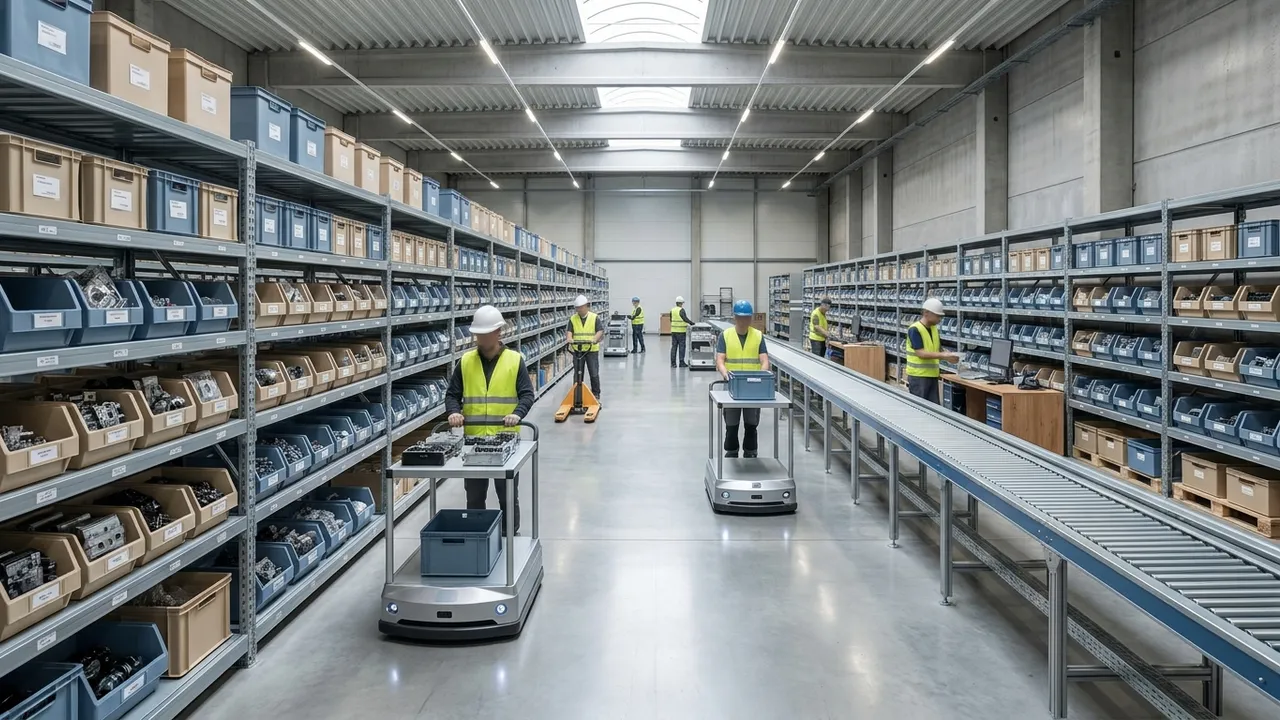
TL;DR: Not every 3PL that handles fulfillment well can handle a deep, technical catalogue with the same reliability. This guide covers what makes high-SKU logistics genuinely different, why identification errors cost more in this category, the questions to ask before you sign, and the signs that a provider actually has the experience they claim to have.
Choosing a 3PL is hard enough when your catalogue is simple. It gets harder when your business runs thousands of unique references, many of them technical, unique, or easily confused with one another. A provider that handles a few hundred SKUs smoothly may struggle badly once the catalogue gets deep. This guide is for e-commerce brands and businesses evaluating a 3PL for exactly that kind of catalogue, and it focuses on what to check before you commit, not on how to run the operation yourself.
What Makes High-SKU and Technical Catalogue Logistics Different?
High-SKU and technical catalogue logistics differ from standard fulfillment because the sheer number of unique references raises the odds of mixing up two similar-looking items, and the cost of that mistake is higher when the product is technical or hard to source again. Volume alone is not the challenge; precision at volume is.
A provider built for simple, high-turnover catalogues often relies on broad processes that work fine at low complexity. Ask any 3PL directly about their SKU count and lot or reference tracking capability, since a system built for a few dozen SKUs does not automatically scale to a few thousand unique ones.
Why Do Identification Errors Cost More in This Category?
Identification errors cost more in high-SKU and technical catalogues because a misrouted part often cannot simply be sold to someone else, and a wrong item shipped to a business customer can halt their own operations. The financial and reputational costs of a single mistake rise quickly when the item is specialised.
This is why order accuracy is not a nice-to-have metric here; it is the metric. Industry benchmarks put strong performers at 99.5% order accuracy or higher, and a provider unwilling to commit to a number in writing is telling you something important about their confidence in their own systems.
What Should You Ask a 3PL Before You Sign?
Before signing, ask a prospective 3PL for their actual order and inventory accuracy figures from the last 30 to 90 days, not a cherry-picked annual average, and ask specifically how their system handles lot tracking, unique references, and special handling requirements. A serious 3PL asks about your SKUs and order profile before it quotes a price, because the price genuinely depends on those answers.
A short checklist worth working through: request accuracy data in writing, not marketing language. Confirm how the provider’s system handles reference-level tracking, not just SKU-level counts. Ask what happens when an item is damaged, mismatched, or needs to be quarantined. And ask for a client reference operating a catalogue similar in depth to yours, since a provider’s experience with a simple catalogue tells you little about how they handle a complex one.
What Are the Warning Signs of a Provider That Isn’t Ready?
The clearest warning sign is a 3PL that quotes a price before asking detailed questions about your catalogue, since a serious provider needs to understand your SKU depth and handling needs before a number means anything. Vague answers about accuracy, or a refusal to quantify it, is the next biggest red flag.
Watch too for providers who cannot describe how their system distinguishes similar references at a technical level, too. A confident, specific answer about lot tracking, reference codes, and quarantine procedures is a good sign. A generic answer about “quality control” without detail usually means the process has not been tested against a catalogue like yours.
How Does Juvo Approach High-SKU and Technical Catalogues?
Juvo builds its handling around unit-level accuracy for exactly this kind of catalogue: high SKU volume, unique references, and error-free picking, across our centres in Nouvelle-Aquitaine and Bourgogne. Whether you run an e-commerce brand or a distribution business, this is our differentiator, not an afterthought.
That discipline runs through the whole operation, from reliable storage and stock management to careful picking and dispatch. See how it applies to your sector on our technical products page.
Conclusion
A high-SKU or technical catalogue deserves a 3PL that treats accuracy as a measurable commitment, not a promise. Ask for real figures, test how the provider discusses reference-level tracking, and treat vague answers as a warning rather than a mere formality. Get this right, and a deep catalogue becomes a manageable operation instead of a daily risk. If you would like to talk through your catalogue’s specific needs, ask us for a quote.
Frequently Asked Questions
What order accuracy rate should a 3PL guarantee for a technical catalogue? Strong providers commit to 99.5% order accuracy or higher, backed by real performance data rather than a marketing claim. Ask for figures from the last 30 to 90 days rather than a cherry-picked annual average.
Why does catalogue depth matter more than order volume when choosing a 3PL? A provider can easily handle high order volume with a simple catalogue, but thousands of unique or technical references increase the risk of misidentification at every pick. Depth and complexity, not volume alone, are what test a 3PL’s systems.
What questions reveal whether a 3PL can handle a complex catalogue? Ask how their system tracks unique references or lots, what happens when an item is damaged or needs quarantine, and for a reference client with a catalogue of similar depth. Vague or generic answers usually signal untested processes.
Is it a red flag if a 3PL quotes a price quickly? Yes. A serious 3PL asks detailed questions about your SKU count, order profile, and handling needs before quoting, because an accurate price depends on that information. A fast, generic quote will usually not reflect your actual costs.
Does Juvo handle high-SKU or technical product catalogues? Yes. Juvo is built around unit-level handling for high-volume, unique-reference catalogues, serving both e-commerce brands and distribution businesses from our centres in Nouvelle-Aquitaine and Bourgogne.