

B2B Warehousing vs E-commerce Warehousing: Why the Same Space Doesn't Work for Both
B2B and e-commerce warehousing solve different problems. Learn what makes B2B storage different and what to look for in a distribution warehouse partner.
By The Juvo team — 25 June 2026
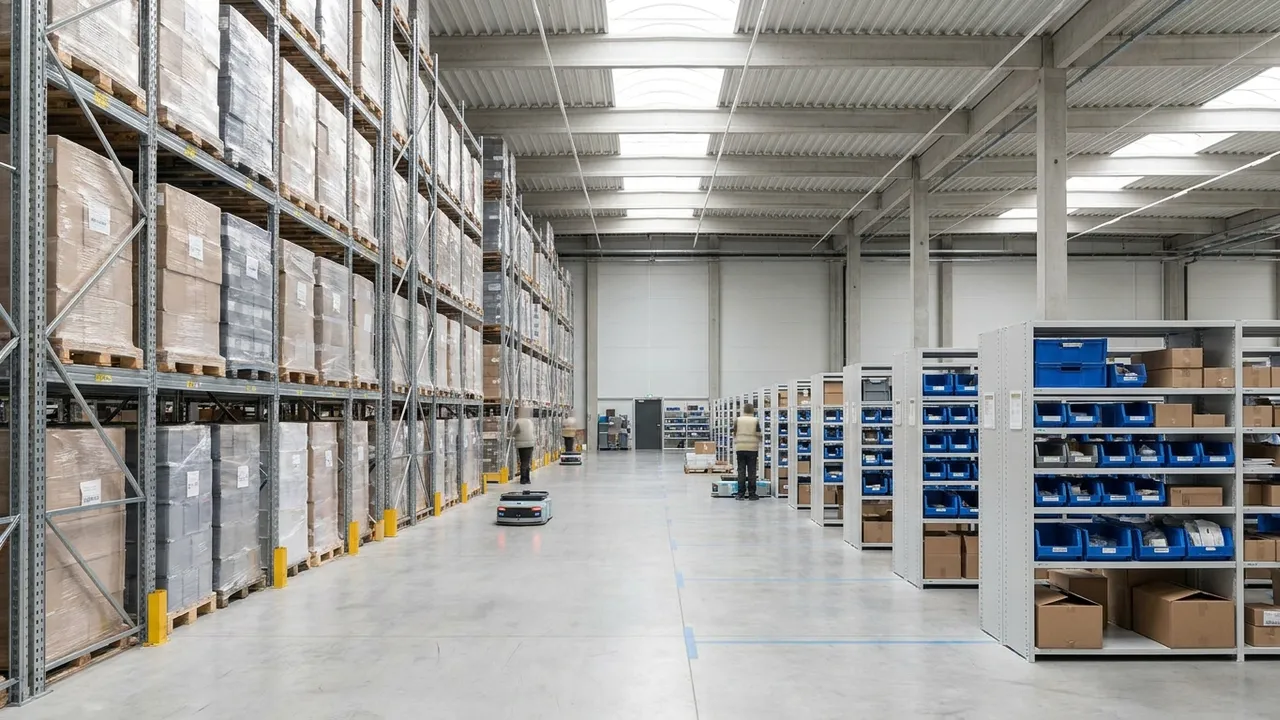
TL;DR: B2B warehousing and e-commerce warehousing solve different problems. One moves large, consistent bulk orders between businesses; the other moves many small, individual parcels to consumers. Applying an e-commerce warehouse’s layout and priorities to a B2B operation, or the reverse, creates friction neither side needs. This guide covers what actually makes B2B warehousing different and what to look for in a distribution partner.
It’s tempting to assume a warehouse is a warehouse: four walls, some shelving, people moving boxes. In practice, a space built to move thousands of small parcels to individual consumers works on entirely different logic from one built to move pallets between businesses. Understanding that difference matters whether you’re setting up storage yourself or evaluating a logistics partner, because the wrong fit shows up as chargebacks, delays, or wasted space.
What Actually Makes B2B Warehousing Different?
B2B warehousing is built around bulk orders moving between businesses rather than small, individual parcels moving to consumers. Where e-commerce fulfilment typically involves one or two items per order, B2B distribution often involves full pallets, cases, or large mixed shipments, and the receiving business usually has its own strict requirements for how that stock arrives.
This changes what “getting it right” means. B2C warehousing prioritises speed and per-parcel accuracy across a high volume of small transactions. B2B warehousing prioritises consistency, compliance, and accuracy at a larger scale, since a single shipment error can affect a whole retail order rather than one customer’s parcel.
Why Do B2B Shipments Need a Different Kind of Precision?
B2B shipments need precision at the level of the pallet or case, not just the individual item, because retail and wholesale partners often have strict labelling, packing, and routing requirements attached to every delivery. A shipment that doesn’t meet those requirements can trigger chargebacks or be refused outright, which is a cost e-commerce parcel fulfilment simply doesn’t carry in the same way.
This means a B2B-capable warehouse needs strong pallet-level tracking, accurate case counts, and correct labelling and documentation on every load, not just accurate picking at the unit level. Getting this right consistently, through careful preparation and dispatch, is what separates a warehouse that merely stores goods from one built to support real distribution relationships.
Does B2B Warehousing Need to Be Faster or Slower Than E-commerce?
B2B warehousing generally trades raw speed for consistency and scale, since a wholesale order moving hundreds of units still needs to arrive correctly assembled and documented, even if it isn’t expected within a day or two like a consumer parcel. The measure of success shifts from “how fast did it ship” to “how reliably did the whole operation perform.”
That doesn’t mean B2B warehousing can be slow. It means the priority is different: getting a large, complex order right the first time protects a business relationship in a way that a single late parcel to one consumer doesn’t. Reliable storage and stock management is what makes that kind of consistency possible at scale.
Should You Choose Dedicated or Shared Warehouse Space?
Dedicated warehouse space gives a business full control over layout, processes, and performance, while shared space spreads the cost of storage across several clients and suits businesses that don’t yet need an entire facility to themselves. Neither option is inherently better; the right choice depends on your volume and how much control you need over the operation.
Growing distribution businesses often start in shared space and move to dedicated space as volume justifies it, rather than committing to a large footprint before it’s needed. A good logistics partner should be able to support either model without forcing a business into more space than it currently needs.
What Should You Look for in a B2B Warehousing Partner?
A B2B warehousing partner needs pallet and case-level accuracy, not just unit-level picking, along with a clear process for handling the labelling, documentation, and compliance requirements your business partners expect. Ask directly how the partner tracks inventory at the case and pallet level, not only at the individual SKU level.
For a distribution business managing a demanding catalogue alongside a growing e-commerce channel, this is exactly the kind of operational depth worth testing before committing. At Juvo, both sides run through the same connected operation, across our centres in Nouvelle-Aquitaine and Bourgogne, so B2B distribution and e-commerce fulfilment don’t have to live in separate, disconnected systems. Ask us for a quote to see how it works for your business.
Conclusion
B2B warehousing and e-commerce warehousing are built to solve different problems, and treating them as interchangeable is where operations start to strain. B2B storage needs pallet and case-level precision, strong documentation, and consistency at scale; e-commerce storage needs speed and accuracy across many small, individual orders. Knowing which one your business actually needs, and finding a partner built for it, is what keeps the whole operation running smoothly as you grow.
Frequently Asked Questions
What is the main difference between B2B and e-commerce warehousing? B2B warehousing moves bulk orders between businesses, prioritising pallet and case-level accuracy and compliance. E-commerce warehousing moves many small, individual parcels to consumers, prioritising speed and per-order accuracy at high volume.
Why do B2B shipments face chargebacks that e-commerce parcels don’t? Retail and wholesale partners often set strict labelling, packing, and routing requirements for incoming shipments. A shipment that doesn’t meet those requirements can be charged back or refused, a risk that doesn’t apply in the same way to a single consumer parcel.
Is B2B warehousing slower than e-commerce fulfilment? Not necessarily slower, but the priority is different. B2B warehousing focuses on getting a large, complex order right and fully documented, rather than optimising for the fastest possible turnaround on a single small parcel.
Should a growing distribution business choose dedicated or shared warehouse space? It depends on volume. Shared space suits businesses that don’t yet need a full facility to themselves, while dedicated space gives more control as volume grows. Many businesses move from shared to dedicated space over time rather than committing early.
Can one warehouse partner handle both B2B distribution and e-commerce fulfilment? Yes, provided the partner has genuine pallet and case-level capability for B2B alongside fast, accurate parcel picking for e-commerce, rather than treating one as an afterthought bolted onto the other.